
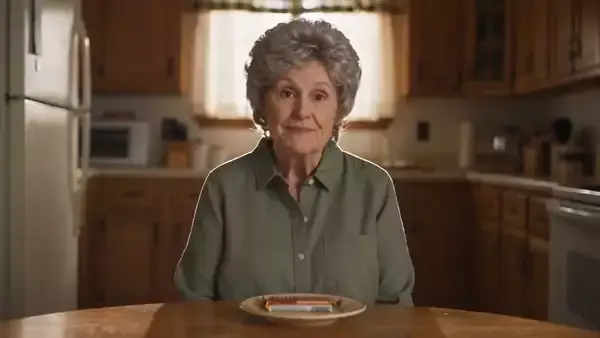
Nutrition Coach: 5 Reasons Coffee Won't Fix The Afternoon Fog
I spent three months looking into this for my 69-year-old grandmother. What I found about protein, omega-3s, B12 and a compound called citicoline changed what sits on her pantry shelf.

My grandmother found the box on her knees, under the light of a sewing machine.
Ruth-Ann is 69. Years ago she turned the old barn behind her house in Joplin into a sewing room, and that is where her afternoons go.
On a Tuesday in late September she dropped a pin. She got down to look for it under the little lamp on the machine, and behind the quilting basket her hand hit cardboard.
A kraft box, barely touched. The box of bars I had left on her sewing table in June and forgotten about.
She called me at 3:40. "Danny, I found your box."
"What box?"
"The bars. I ate the lemon one under the lamp, and it's not bad."
Then she said the thing that started this whole article. "I was just putting the coffee on when I found it."
Of course she was. It was 3:40 in the afternoon.
Maybe you know that hour too. The paragraph you read twice because the first pass slid right off… the name that hangs on the tip of your tongue… the walk into the kitchen with no destination.
If any of that sounds familiar… you are NOT alone. And you are not imagining it.
My name is Dan Hollister. I am a Certified Nutrition Coach, and I write about food and aging for people who would rather read a label than a lecture.
For the last three months I have been looking into exactly this problem for one person: the woman in the barn, who drove a school bus in Joplin for twenty-two years.
She has a sharp mind. She also has what she calls "the three o'clock fog."
And like most Americans over 55, her answer to the fog has always been the same thing.
Another cup of coffee.
Why so many of us feel this way after 55
Here is what surprised me when I started digging.
The afternoon fog is rarely about one thing. It is usually three or four small gaps stacking up at the same hour.
Take vitamin B12. The National Institutes of Health reports that, depending on how you define it, anywhere from 3% to 43% of older adults living at home run low on B12 by blood measure.[1]
Why so wide a range? Because a condition of the stomach lining called atrophic gastritis affects roughly 2% of the general population… but 8% to 9% of adults 65 and older.[1]
That thinning lining makes less acid and less of a helper protein called intrinsic factor. Without those two, the B12 in food simply does not get pulled out of the food.[1]
Now take omega-3s. The same agency reports that EPA and DHA from food add up to about 90 milligrams a day in the average American adult.[2]
Ninety milligrams. A single 3-ounce serving of farmed salmon holds about 1,240 milligrams of DHA alone.[2]
Most of us are not eating salmon on a Tuesday afternoon. We are eating crackers.
Then there is protein. Ask yourself honestly what your lunch looked like today… and how many grams of protein were in it.
For my grandmother, the answer was "a slice of toast and a banana." That is not a lunch.
That is a bridge to a crash.
So when the fog rolls in at three… you reach for the coffee pot. Everybody does.
And here is the problem.
Coffee is NOT the answer to the three o'clock fog
I love coffee. I am not here to take your morning cup away.
But I want to be blunt about what that SECOND or THIRD cup is actually doing in the afternoon.
It is renting you ninety minutes of alertness… on a credit card you pay off at bedtime.
The European Food Safety Authority states plainly that caffeine in moderate doses increases alertness and reduces sleepiness. That part is real.[3]
But alertness is not the same thing as clear thinking. And a stimulant is not the same thing as a nutrient.
Coffee does nothing for the B12 gap. Nothing for the omega-3 gap.
Nothing for the protein gap.
It just makes the gaps feel less urgent for an hour or two. Then the bill comes due.
After three months of reading, I count FIVE major problems with using coffee to answer the afternoon fog.
Let me walk you through them.
Coffee borrows energy. It never builds anything.
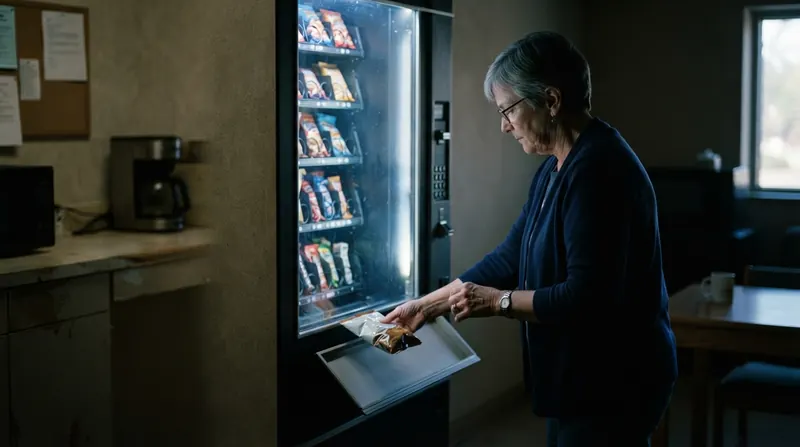
Here is the simplest way I can put it.
Caffeine blocks the signal in your brain that says "you are tired." It does not remove the tiredness. It hides it.[3]
That is why the fog comes back at five… and why the five o'clock cup turns into a night of staring at the ceiling.
The Food and Drug Administration cites 400 milligrams of caffeine a day as the amount not generally tied to negative effects in most healthy adults.[4]
That sounds like plenty, until you learn that ONE 12-ounce cup of brewed coffee can hold anywhere from 113 to 247 milligrams.[4]
Two big mugs in the morning, one "little one" at three… and you can sail past the line without ever feeling like a heavy coffee drinker.
And past that line, the same agency lists a faster heartbeat, palpitations, jitters, an upset stomach, headache and sleep disruption.[4]
My grandmother's three o'clock cup was not helping her think. It was helping her feel wired while she still could not find the word she wanted.
Problem number one, then: coffee is a loan. And your brain is not asking for a loan in the afternoon.
It is asking for groceries.
Coffee has zero protein, and your afternoon needs some
Pour a black coffee and look at the label you would print for it.
Protein: 0 grams.
Now think about what you actually ate at noon. If it was like my grandmother's lunch, it was mostly carbohydrate… and it was gone by two.
Protein is the part of a meal that keeps you feeling fed instead of merely full. It is the part that does not spike and crash.
When the slump hits and you answer it with a stimulant, you have skipped the one thing that could have kept the slump from arriving.
MOSH, the bar I will get to in a minute, carries 12 to 13 grams of protein in one bar. A coffee carries none.
That difference is not a detail. It is the whole afternoon.
Coffee does nothing for the omega-3 gap
Remember that number from the National Institutes of Health… about 90 milligrams of EPA and DHA a day from food in the average American adult?[2]
Put it next to this: a typical fish oil capsule provides about 1,000 milligrams of oil, with roughly 180 milligrams of EPA and 120 milligrams of DHA.[2]
So one ordinary supplement serving delivers more than three times what most of us get from a whole day of food.
Why does that matter for the fog? Because omega-3s are a structural part of brain tissue, and the research on them is most interesting in people who are already short.
A 2015 meta-analysis of trials in healthy adults found that DHA, alone or with EPA, improved episodic memory in adults with mild memory complaints.[5]
Episodic memory. That is the "what did I come into the kitchen for" kind.
And when the dose went above 1 gram a day of DHA plus EPA, the same review reported improved episodic memory regardless of where people started.[5]
I want to be fair here. Not every trial agrees, and I will show you one later that found nothing at all.
But a cup of coffee contains exactly zero milligrams of omega-3s. On that point there is no debate.
Coffee cannot touch a B12 gap, and after 65 the gap is common
This is the one that got my attention for my grandmother.
B12 is the vitamin most tied to nerve signaling and to making red blood cells. And it is the vitamin older stomachs have the hardest time pulling out of food.[1]
Go back to those figures: 8% to 9% of adults 65 and older with the thinned stomach lining… and anywhere up to 43% of older adults running low by blood measure.[1]
Now here is the part that matters for what you EAT rather than what you swallow.
I also want to be straight with you about the limits.
A 2018 Cochrane review of 14 trials in 27,882 adults concluded that B-vitamin supplements probably have little or no effect on overall thinking in people who are NOT short on them.[6]
That is fair. If your B12 is fine, more B12 is not a master key.
But the review said nothing about people who are low… and after 65, a lot of us are.[1]
Coffee, meanwhile, delivers none at all. And the acid-reducing habits that often come with a nervous stomach do not help the picture.
The afternoon coffee has quietly become a dessert
Be honest about the three o'clock cup.
Is it black? Or is it a flavored, whipped, caramel-drizzled 16-ounce something from a drive-through?
The Dietary Guidelines for Americans, 2025–2030, advise keeping any single meal to no more than 10 grams of added sugars… and avoiding sugar-sweetened drinks altogether.[7]
A sweetened afternoon drink can clear that 10-gram line before you have taken the lid off.
And if you have swapped coffee for an energy drink, the picture is worse. The National Center for Complementary and Integrative Health notes a 16-ounce energy drink may carry 54 to 62 grams of added sugar… along with 70 to 240 milligrams of caffeine.[8]
Sugar on top of caffeine is the recipe for the four-thirty crash. You know the one.
So that is five.
- Coffee borrows alertness; it does not build anything.[3]
- Coffee has zero protein for an afternoon that needs some.
- Coffee has zero omega-3s, and most of us are already short.[2]
- Coffee cannot touch a B12 gap, which is common after 65.[1]
- The afternoon cup has often become a sugar delivery system.[7]
Five real problems… and not one of them is solved by brewing a stronger pot.
So what do you do instead?
What a 2021 trial told me about doing it with food instead
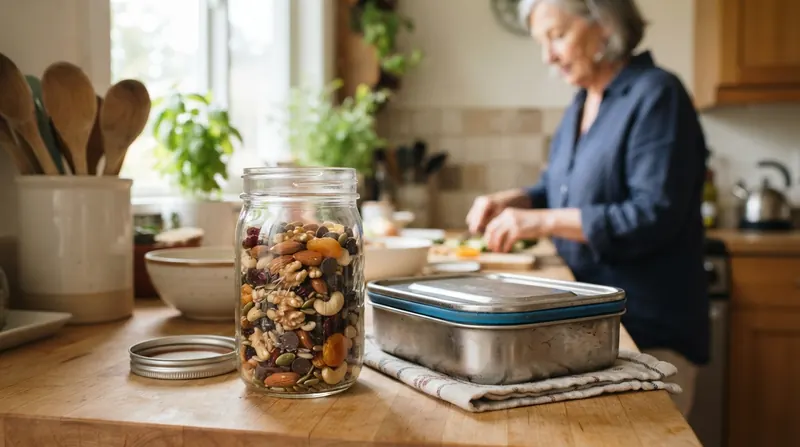
About six weeks into my reading, I found a trial that reframed the whole question for me.
It was published in the Journal of Nutrition in 2021. One hundred healthy adults, aged 50 to 85, all with the ordinary forgetfulness that comes with age.[9]
Half took 500 milligrams a day of a compound called citicoline. Half took a placebo.
Twelve weeks.[9]
At the end, the citicoline group showed greater improvement on an episodic-memory test than the placebo group.[9]
Both groups improved overall, which is normal when people practice a test. But the gap on the memory test went to citicoline.[9]
Now, citicoline is not a mushroom or an herb. It is a compound your own body makes from choline.
And the branded form used in trials, called Cognizin, is also the form MOSH puts in its bars.
That was the moment the lightbulb went on for me.
Because what my grandmother needed was not a seventh thing to remember to swallow in the morning. She already had a tray of them.
What she needed was ONE thing she would actually do… at the exact hour the fog showed up.
A once-a-day snack. Something with real protein, the omega-3s she was not getting, the B12 her stomach could actually use… and the citicoline from that trial.
In other words, replace the three o'clock coffee with something that feeds the gaps instead of hiding them.
And that is exactly what the bar in her barn was designed to do.
But before I get to the bar, I want to tell you where its best-known ingredient comes from. Because the story is remarkable.

Let's start in a hardwood forest in late summer

Picture an old oak, half dead, standing in a damp Ozark hollow in September.
On the north side of the trunk, where a limb broke off years ago, something white is growing. Not a shelf.
Not a cap.
A cascade. Hundreds of soft white spines hanging straight down, like a frozen waterfall the size of a cantaloupe.
Foragers call it lion's mane. Scientists call it Hericium erinaceus.
In Japan it is yamabushitake, "the mountain-priest mushroom," after the shaggy white garments of the mountain monks.
For centuries it was simply food. Cooks in China and Japan sliced it, seared it, and served it for its texture, which is closer to crab than to any mushroom you know.
Then, within the last couple of decades, it started showing up somewhere else: in placebo-controlled trials.
One of the trials that caught my eye was published in Biomedical Research in 2019. Thirty-one healthy adults, all over 50.[10]
For twelve weeks, one group took a daily lion's mane fruiting-body preparation, 3.2 grams a day. The other took a placebo.[10]
At the end, the lion's mane group scored higher on a standard mental-status test than the placebo group.[10]
I need to be honest about two things.
Thirty-one people is a small trial. And 3.2 grams a day is a lot more lion's mane than you will find in any snack bar.[10]
A second trial, a pilot in Nutrients in 2023, tested a single 1.8-gram dose in 41 younger adults and found faster performance on a color-word task an hour later… but only a non-significant trend after 28 days.[11]
So lion's mane is promising, not settled. I am telling you that because the people selling it usually will not.
But here is why it still belongs in this story.
Lion's mane is a FOOD. It has been a food for a very long time.
Putting it in a bar is not a stretch; it is a return.
And it is one of six ingredients, not the whole formula. The formula is built the way a good lunch is built: in layers.
What's actually in the bar, one ingredient at a time
MOSH describes its bars as having "six brain and body ingredients." Here is what they are, and what I found on each one.
1. Cognizin citicoline
This is the ingredient from the 2021 trial I just showed you.[9]
There is a second, smaller trial worth knowing. In 2012, sixty healthy women aged 40 to 60 took either 250 milligrams of Cognizin, 500 milligrams, or a placebo for 28 days.[12]
Both citicoline groups made fewer errors on a computerized attention task than placebo.[12]
Fair notice: several of the authors were affiliated with the ingredient's maker, and the trial was in women only. I weigh that.[12]
But attention errors are exactly what the three o'clock fog looks like on a screen. Rereading the paragraph.
Missing the line.
2. Lion's mane
The mushroom from the oak tree. Promising in a 12-week trial of adults over 50, at a dose far above a snack.[10]
In a bar, think of it as a food ingredient with an interesting research trail, not a dose from a trial.
3. Omega-3s
The gap-filler. Average Americans get about 90 milligrams of EPA and DHA a day from food.[2]
A 24-month trial in Clinical Nutrition gave 60 adults aged 65 and older a daily combination of 1 gram of fish oil, carotenoids and vitamin E. The combination group made fewer errors on working-memory tasks than placebo, with small effects that grew as the tasks got harder.[13]
Working memory is the "hold this number while I write it down" kind. Small effect, but real, and it grew where it was needed most.
Balance: an 18-month trial of 390 adults aged 65 to 90 using a very high dose of DHA-rich fish oil found no benefit at all, and a small negative effect on psychomotor speed.[14]
So more is not better. A modest amount, every day, in food, is the pattern the better results share.
4. Ashwagandha
An Indian root with a long kitchen history and a growing trial record.
In a 90-day double-blind trial of 125 healthy adults who reported day-to-day tension, 300 milligrams a day of a sustained-release root extract was tied to better memory and focus scores than placebo.[15]
The catch: participants were 20 to 55, not 65. And 300 milligrams is a supplement dose, not a snack dose.[15]
A 2024 trial of 59 young adults found better scores on some measures of word recall, reaction time and picture recognition with 225 milligrams a day for 30 days.[16]
Again, young people and a specific extract. I include it because it is the research trail behind the ingredient, not because a bar reproduces the trial.
5. Vitamin B12
The one your stomach stops handling well after 65, and the one fortified foods deliver in the easy form.[1]
No upper limit has been set for B12 because of its low potential for toxicity.[1]
6. Vitamin D3
The sunshine vitamin that most of us run short of from October to April.
I will be plain: a three-year trial of 2,157 adults over 70 found that 2,000 IU of D3 a day, on its own, produced no significant benefit on a cognitive screening score.[17]
So D3 is not in the bar to make you sharper by itself. It is there because it is a basic vitamin a lot of older adults are missing, and a bar is a convenient place to carry it.
That is the six.
And then there is the seventh thing, the thing that is not on the "brain" list at all but may matter most at three o'clock.
12 to 13 grams of protein.
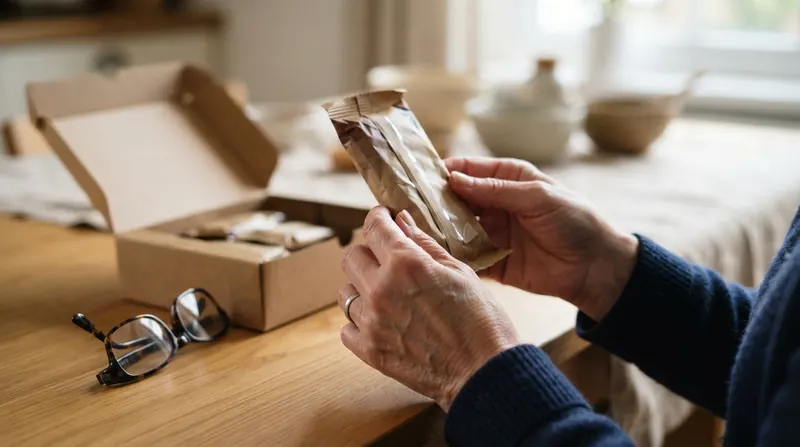
The box that went on my grandmother's middle shelf
Here is what happened in Joplin, the second time.
The first box, you already know about. I set it on her sewing table in June, it slid behind the quilting basket, and it took a dropped pin to find it.
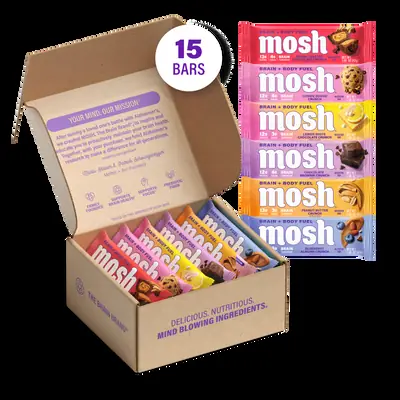
So in October I drove over on a Saturday with a fresh 15-bar variety pack from MOSH. Five flavors, three of each.
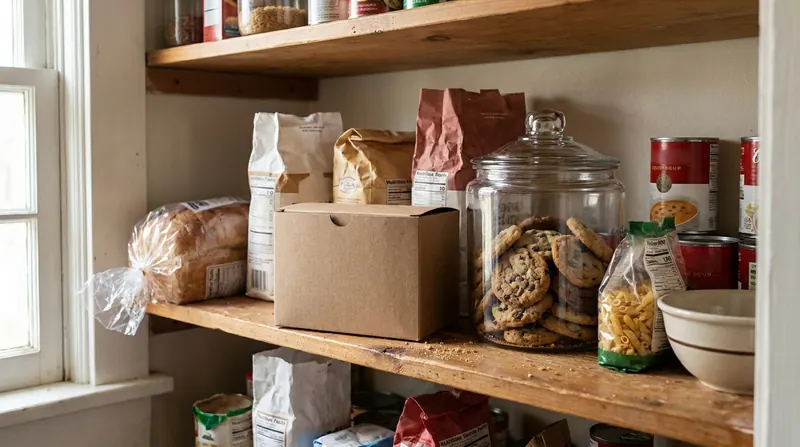
This time I put the box on the middle shelf of her pantry, right next to the cookie jar. On purpose.
Because the cookie jar is where her hand goes at three o'clock. I wanted the better choice to be the closer choice.
The deal we made was simple. No new routine, no chart, no tray.
Just this:
When the fog shows up… before the coffee pot… one bar.
She rolled her eyes. "I already told you the lemon one is fine, Danny."
"Then eat the lemon one. Before the coffee, not with it."
She gave me the look she used to give the kids in the back row of the bus.
I am not going to tell you what happened to her memory, because I did not measure it and I will not pretend I did.
What I can tell you is that the three o'clock cup became a one o'clock cup. Then it became an occasional cup.
And a woman who had eaten toast for lunch for a decade was now getting 12 grams of protein in the middle of her afternoon without thinking about it.
That is the whole idea. Make the good choice the easy choice, and put it where the hand already goes.
11,225 reviews, a 4.8-star average, and four I pulled word for word
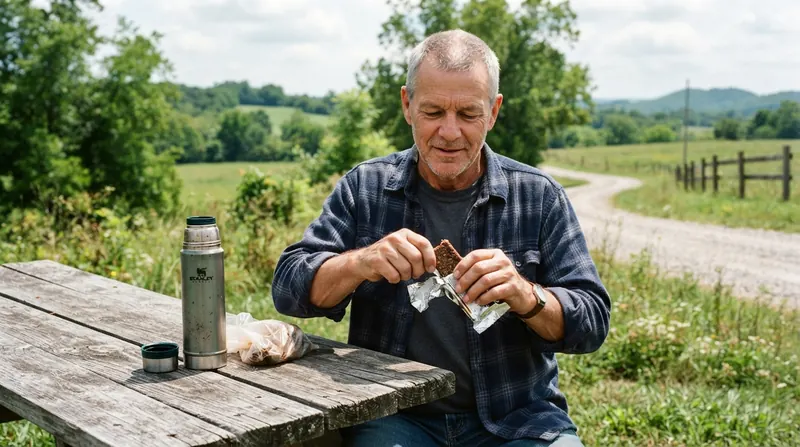
My grandmother is one person. So I went and read what other people said.
The MOSH product page shows a 4.8-star average across 11,225 reviews as of the day I checked.
Here are four of them, exactly as written on the seller's page. The reviewers' names are not displayed there, so I am not going to invent any.
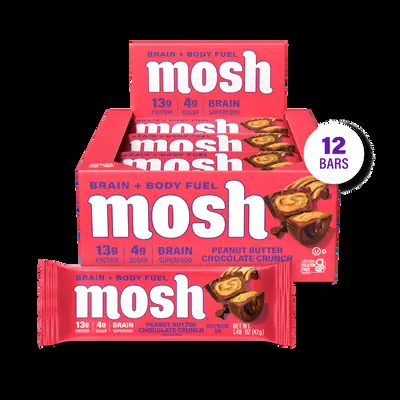

Ive purchased 2 variety packs on line. Good texture and flavors, and some are better then others.

Variety Pack is excellent! All the bars are tasty.

Good texture and flavors. Of course, some are better then other, my favorite is "Lemon"

They are delicious and I love blueberry so it's a perfect match!
*Individual results vary. Reviews are personal opinions about taste and texture, quoted from the seller's page; portraits are illustrative and do not depict the reviewers.
Notice what those reviews are NOT saying. Nobody is claiming a transformation.
They are saying the bars taste good, the texture is right, and some flavors beat others. Which is exactly what you want from a food you are going to eat every afternoon.
Because the best formula in the world does nothing if it sits in the box.
Or behind a quilting basket.
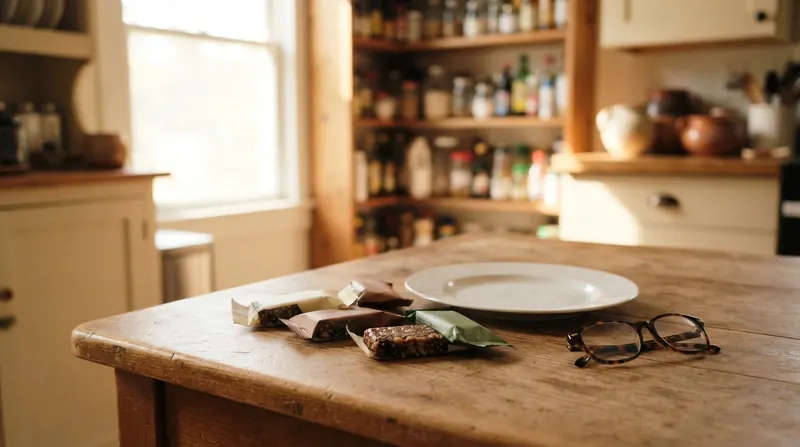
What I call "food-first stacking"
There is a reason I keep coming back to the word FOOD.
Most people who want to do something about the afternoon fog go out and buy five separate things. A fish oil.
A B12. A mushroom powder.
A root extract. A vitamin D.
Then they put all five on the counter… and three weeks later, four of them are still on the counter.
I have watched it happen in dozens of kitchens. Compliance is the problem.
Not chemistry.
What MOSH did is what I call food-first stacking: put the six ingredients into something you were going to eat anyway, at the time of day you were going to eat it.
Without boring you with the science, all you need to know is this:
- Protein first, so the bar feeds the afternoon instead of spiking it.
- The omega-3s ride along in a food, in a modest daily amount, the pattern the better trials share.[13]
- The B12 arrives in the free form that older stomachs handle more easily.[1]
- Citicoline, the ingredient from the 2021 trial, comes in its branded Cognizin form.[9]
- Lion's mane and ashwagandha are there as food ingredients with a research trail, not as a trial dose.[10]
- One bar, once a day, at the hour the fog shows up. No tray, no chart, no reminder.
That last line is the one that matters.
A nutrient you take every day at a modest level beats a nutrient you take at a heroic level for nine days and then forget.
And a snack you look forward to beats a capsule you resent.
Can you picture yourself this time next month?

Let me paint it for you, because it is what I saw in Joplin.
It is 3:10 on a Wednesday. The dishes are done.
The crossword is half finished and the pen is still in your hand.
The fog starts to roll in, right on schedule.
But instead of walking to the coffee pot… you open the pantry and reach for the box beside the cookie jar.
Lemon today. Or the blueberry one that reviewer loved.
Twelve grams of protein. The omega-3s.
The B12 in the form your stomach can use. The citicoline from the trial.
You finish the crossword. You finish it without rereading the clue three times.
At 5 o'clock you are making dinner, not pacing. At 10 o'clock you are asleep, not staring at the ceiling because of a 4 o'clock latte.
And picture the end of the month, when you have done this thirty times without once having to remember to do it.
That is not a transformation story. It is a habit story.*
And habits are the only thing I have ever seen actually move the needle after 55.

"Isn't this just a candy bar with vitamins sprinkled on?"
My great-aunt Frances, Ruth-Ann's sister, comes to the barn on Thursdays to quilt. She picked a bar off the sewing table, turned it over, and gave her verdict.
"If it comes in a wrapper, Danny, it's a candy bar."
It is a fair question. The snack aisle is full of bars that are candy with a halo.
My grandmother answered before I could. "Read the back, Fran."
So here is how I answered Aunt Frances, and how I would answer you.
First, look at the protein line. A candy bar with vitamins sprinkled on does not carry 12 to 13 grams of protein, because protein is expensive and it changes the texture.
Protein is the tell. It is the difference between a snack that holds you until dinner and a snack that sends you back to the pantry in forty minutes.
Second, look at what is NOT on the label. No caffeine.
Nothing in there to make you feel something at minute twenty.
A product built to feel like a candy bar wants you to feel something fast. A product built to be a habit wants you to feel nothing in particular… and to come back tomorrow anyway.
Third, look at the six ingredients and ask whether they are there for the front of the box or the back of the box.
Citicoline in its branded Cognizin form is a back-of-the-box decision. It costs more than the generic, and most shoppers have never heard of it.[9]
Nobody puts it in for the halo. They put it in because of the trials I showed you.
Fourth, look at who is selling it and how. MOSH sells the bar directly, with a phone line and an email on the site.
That is not proof of anything by itself. But I have spent enough time with brands that hide behind a contact form to notice when one does not.
Fifth, and this is the one Aunt Frances actually cared about: does it taste like food?
She tried the blueberry one on the spot. She did not say anything for a while.
Then she asked which flavor was next.
I want to add one more thing here, because it is the part most pages like this skip.
A bar is still a bar. It has calories, it has sweetness, and it is not a license to skip the fish, the eggs or the vegetables.[18]
The Dietary Guidelines still want three servings of vegetables and two of fruit a day, and omega-3-rich seafood on the plate when you can manage it.[18]
The bar is for the hour those things are not on the table. The three o'clock hour.
The rest-stop hour. The "I am not cooking a salmon fillet at my desk" hour.
Keep the meals. Swap the coffee.
That is the whole program.
The MOSH Mind Blowing Variety Pack
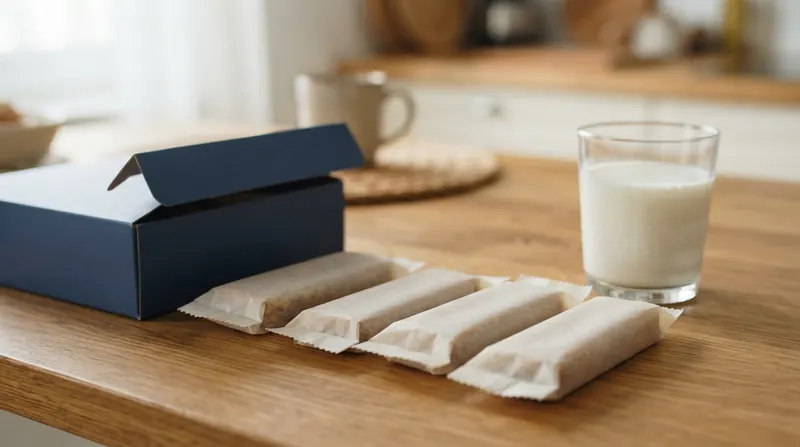
So here is the bar that went on my grandmother's shelf.
MOSH was cofounded by Maria Shriver and her son Patrick Schwarzenegger. It is a family that has spent years talking publicly about the brain, and they built the bar around that.
The company calls it "the protein bar made for your brain." Here is what that means on the label.
- 12 to 13 grams of protein per bar, depending on flavor.
- Six brain and body ingredients: lion's mane, ashwagandha, omega-3s, vitamin B12, vitamin D3 and Cognizin citicoline.
- Keto friendly and Certified Gluten-Free, per the seller's description.
- Five best-selling flavors in one 15-count box, so you find your favorite before committing to a case.
- Individually wrapped, so it goes in a purse, a glove box or a picnic bag without a second thought.
- A 4.8-star average across 11,225 reviews on the seller's page.
And here is what it is NOT.
- Not a capsule, a powder or a shot. It is a food you chew.
- Not a caffeine product. There is no stimulant doing the work.
- Not a replacement for lunch, for the advice of your own health professional, or for eating fish.
- Not a trial dose of any single ingredient. It is a food with six of them in modest amounts.
The variety pack is the one I recommend starting with, for a simple reason.
My grandmother's favorite turned out to be lemon. Aunt Frances and the reviewer above went for blueberry.
You will not know yours until you have tried all five.
Fifteen bars is fifteen afternoons. That is enough to find out whether the three o'clock cup actually goes away.
A latte at a drive-through runs more than $3.67 in most of Missouri. And it does not come with 12 grams of protein.
You can check the current price and whether the variety pack is in stock here:
Three quick shopping questions, then the MOSH product page opens. No purchase obligation.
The two things I watched people get wrong in the first week
Since that Saturday in Joplin, I have set up this same swap in a handful of other kitchens. Two mistakes show up almost every time.
Mistake one: eating the bar WITH the coffee.
It feels harmless. Bar in one hand, mug in the other, same as always.
But then you have added calories to the afternoon without subtracting anything. And the caffeine is still renting your evening.
The rule is bar INSTEAD of coffee. If you still want the cup at four, fine.
But let the bar go first and see whether the cup still calls.
Mistake two: hiding the box.
People put the box in a cupboard above the refrigerator, "to keep it away from the grandkids."
Three weeks later the box is still full and the cookie jar is empty.
There is a third thing, though it is less a mistake than a surprise.
People expect to feel something. They eat the bar at 3:05, and at 3:25 they check in on themselves like they are waiting for a kettle.
Nothing happens at 3:25. That is correct.
There is no caffeine in it, and there is no ingredient in it that announces itself.
What happens is at 4:30, when the crash does not arrive. And at 10 p.m., when sleep arrives on time.
And at the end of the box, when you look at your index card and notice the coffee pot has been cold since Tuesday.
Ruth-Ann's words, not mine: "The pot has been cold since Tuesday. Don't let it go to your head, Danny."
Measure the swap in afternoons, not minutes. That is how the trials measured their ingredients, and it is how your pantry will measure this.*
Three more trials, with the figures and the fine print
I promised I would not cherry-pick. So here are three more, including one that found nothing.
That is the ashwagandha trial. Ninety days, double-blind, placebo-controlled, 125 people.[15]
The fine print is that nobody in it was 65. I would love to see the same trial in my grandmother's age group.
That is the omega-3 review. Episodic memory improved; the other kinds did not budge.[5]
Honest reading: omega-3s seem to help the "where did I put it" memory in people who have started to notice it slipping… and not much else.
And that is the one that found nothing. Three years, 2,157 healthy and mobile adults over 70, vitamin D3 and omega-3s alone or together.[17]
Why am I showing you a null result in an article about a bar that contains both?
Because you deserve to know that single nutrients, handed to healthy people who are not short on them, mostly do not move a screening score.[17]
That is the WHOLE argument for food-first stacking. Fill the gaps that are actually there, with protein and a real snack, instead of expecting one vitamin to do a job on its own.
Look at that chart for a second.
Not one of those trials ran for a week. The shortest was 28 days.
The longest was two years.
Which tells you the one thing every advertiser hates to say out loud: this is a daily habit, measured in months. Not a Tuesday.
The people I would hand this box to, and the ones I would not
After three months of this, here is how I sort it.
I would hand the box to you if:
- You are over 55 and the three o'clock fog is a regular visitor.
- Your lunch is "whatever is quick," and you know it is light on protein.
- You do not eat fish twice a week, and you are not about to start.[2]
- You have tried buying five separate supplements and watched four of them gather dust.
- You want one habit, at one hour, that you will actually keep.
- You like a snack that tastes like a snack, with lemon and blueberry on the short list.
I would NOT hand it to you if:
- You are looking for a stimulant. There is no caffeine in it, and that is the point.
- You expect a measurable change in a week. The trials above ran 28 days to two years.
- You have a food allergy or a health condition and have not read the full label with your own health professional.
- You are already eating a protein-rich lunch, fish twice a week and a fortified breakfast. You may simply not have the gaps.
That last one matters. If you do not have the gaps, a bar will not fill them.
But if you are like my grandmother, with toast at noon and coffee at three… the gaps are the whole story.
Fifteen bars, five flavors, one honest answer
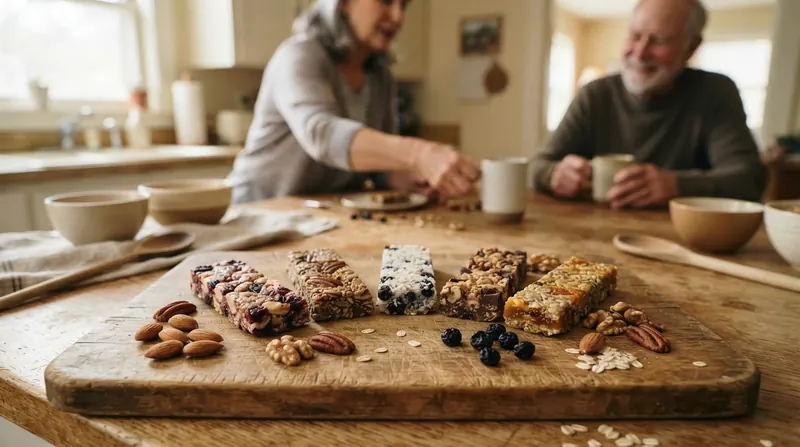
People ask me why I started my grandmother on the variety pack instead of a case of one flavor.
Because taste is compliance. If she does not like the flavor, the box becomes furniture.
Five flavors, three of each. By bar number six, she knew lemon was her favorite and one of the others was "fine."
That is the information you want BEFORE you commit to a full case of anything.
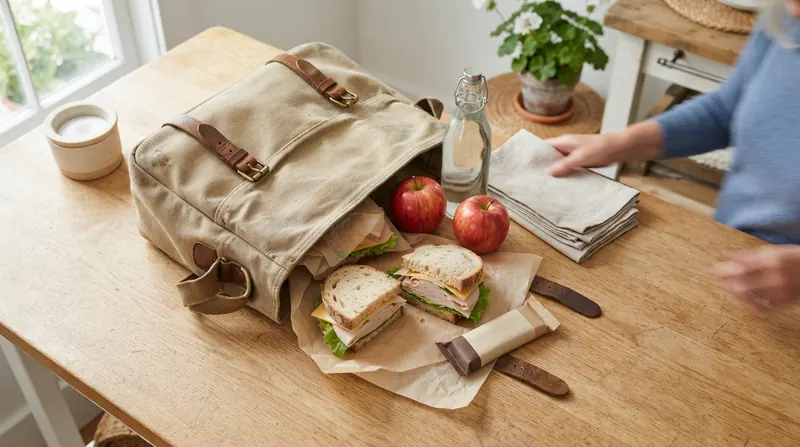
It is also why I like the bar as a road-trip food. Three different flavors in the side pocket of a picnic bag beat three identical ones.
And it is why the box lives on the middle shelf now, not in a drawer and not in a barn. The hand goes where the eye goes.

How to find out, in one box, whether the coffee goes away
Here is the exact plan I gave my grandmother. It fits on an index card.
One box, fifteen afternoons
- Days 1–5One bar at the first sign of the fog, BEFORE the coffee pot. Try a different flavor each day. Write the flavor and a one-word verdict on the box.
- Days 6–10Keep the three you liked in the picnic bag or the glove box. Notice when the afternoon cup happens, if it happens at all.
- Days 11–15Pick your two favorites. Decide whether the three o'clock coffee is gone, moved, or unchanged. That is your answer.
- Day 16Reorder the flavors you liked, or do not. Either way, you know something you did not know two weeks ago.
Notice what is NOT on the card. No memory test.
No score. No "rate your fog from one to ten."
Just one question: did the three o'clock cup go away?
For my grandmother, it moved to one o'clock in the first week and became occasional in the second. Your afternoon may read differently.*
But it is a real question with a real answer, and fifteen bars is enough to answer it.
"$54.99 for snack bars?" I had the same reaction.
Let me do the arithmetic I did at my grandmother's table.
A 15-bar box is $54.99. That is $3.67 per bar before tax and shipping.
A drive-through latte in Springfield runs more than that. A bottled protein shake at the gas station runs close to it.
Neither comes with lion's mane, citicoline, omega-3s, B12 and D3. Neither replaces the afternoon coffee; the latte IS the afternoon coffee.
So the honest comparison is not "bar versus nothing." It is "bar versus whatever you are already buying at three o'clock."
For my grandmother, that was a 20-ounce flavored coffee twice a week and a sleeve of cookies. The bar came out cheaper.
Is it the cheapest snack in the store? No.
Is it the cheapest way to put 12 grams of protein and six brain and body ingredients into a 3 o'clock habit you will keep? I have not found a better one.
What readers ask me about the MOSH variety pack
Questions readers ask
How many bars do you eat a day?
One, at the hour the fog shows up. It is a food, not a dosing schedule, and one bar a day is how I set it up for my grandmother.
Is there caffeine in it?
No. The whole point is to replace the afternoon stimulant with protein and nutrients, not to hide a stimulant in a bar.
Which flavor should I start with?
That is why I recommend the variety pack. Reviewers on the seller's page single out lemon and blueberry, and my grandmother landed on lemon.
How fast will I notice anything?
Give it the full box. The trials behind the ingredients ran from 28 days to two years, and a protein habit shows up in your afternoon long before anything else does.*
Does it replace fish, eggs or a real lunch?
No, it replaces the three o'clock coffee and the cookie that comes with it. Keep eating real meals.
Can I eat it if I have a food allergy or a health condition?
Read the full label on the current box first, and ask your own health professional. I cannot see your label or your chart from here.
Is it a subscription?
The listing I used shows a one-time 15-bar box at $54.99. Read the option you select at checkout, because sellers change their offers.
What about returns?
MOSH publishes a phone line and an email, listed below. Check the current return terms on their site before you order; I do not quote terms I have not seen in writing.
Why are the reviews unnamed?
Because the seller's review widget does not display names, and I will not make them up. The four quotes above are word for word.

Stop renting your afternoons from the coffee pot
Let me bring this back to the barn.
The name on the tip of your tongue. The paragraph you read twice.
The kettle going on at 3:40 for no reason you could name.
You are not alone in that. And you are not stuck with it as a coffee problem.
Five real reasons the afternoon cup cannot answer it: it borrows, it has no protein, it has no omega-3s, it cannot touch a B12 gap, and it has quietly become a dessert.
One once-a-day swap that feeds all five gaps at once, at the hour you already reach for something.
Backed by a 2021 trial on its citicoline, a 2019 trial on its lion's mane, a 24-month trial on its omega-3 pattern… and an honest null result I showed you anyway.
Fifteen bars. Five flavors. $3.67 each.
One index card.
My grandmother's three o'clock cup is now an occasional one. Her pantry shelf looks different.
Her lunch, oddly, got better too, because once the afternoon was handled she stopped grazing through it.
I cannot promise you her afternoon. I can tell you the box is where I would start.*
Just not behind the quilting basket.
Opens three shopping questions, then the MOSH variety pack page. Check the current price, label and return terms there.
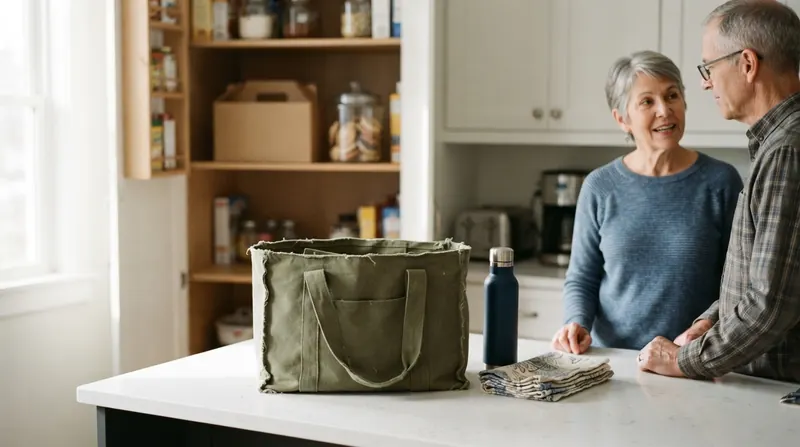
P.S. If you only remember one thing from this page, make it the shelf. Put the better choice where the hand already goes at three o'clock, and let the habit do the rest.
P.P.S. My grandmother wants me to tell you the lemon one is the best. The reviewer who loves blueberry disagrees.
Our money-back guarantee
MOSH's Terms, in Plain Words
MOSH sells the Variety Pack on a subscription you can pause or cancel from your account page, and single boxes without one; the current price prints on the seller's page.
MOSH prints its alliance with the women's brain-health nonprofit founded by Maria Shriver right on its own site, and the bars are keto-friendly, gluten-free and non-GMO by their label.
The 15-bar Variety Pack samples all five flavors, three bars of each, so nothing goes to waste if one flavor isn't for you; a best-by date prints on every wrapper.